
Meet the women steering Sri Lanka’s industries away from fossil fuels


Asanka Kodithuwakku
Asanka Kodithuwakku, Senior Executive on Sustainability at Convenience Foods Lanka, began her energy management training early last year amidst Sri Lanka’s worst energy crisis. The country’s reliance on imported fossil fuels put a major strain on government finances; businesses saw their operating costs skyrocket and everyone faced unprecedented petrol shortages.
“Energy is a hot topic these days,” said Asanka back in January 2023. “We are facing an energy crisis … The electricity tariff rate has been going up day by day and it is very difficult to meet profitability.” With an eye on a number of renewable solutions for the near future, setting up a robust energy management system across the entire operation has been a game-changer. “We have to have these kinds of [energy saving] initiatives. Without energy, we cannot run our business.”

Shirangi Samararatne
Meanwhile, the effects of the climate crisis are hitting Sri Lankans hard. Super Shine Business Consultancies CEO, Shirangi Samararatne, who grew up enjoying the cooler weather in Central Sri Lanka, says temperatures are rising everywhere across the island. Droughts and floods are more frequent and unpredictable affecting everything from food and water supplies to hydropower production, which causes regular blackouts.
That’s why Shirangi is doubling down on her efforts to help companies explore other clean sources of electricity and innovate with a mix of solutions. Her focus is on the smaller companies who, she says, are reliant on domestic markets, less exposed to global sustainability trends and risk falling behind. “A knowledge gap exists, particularly among small businesses who have yet to grasp how managing energy effectively can reduce production costs.”

Sashika Kaluwahewa
In industries of all sizes and sectors, changing how energy is valued and handled can be a challenge. Sashika Kaluwahewa, Sustainability Manager at Jetwing Hotels, knows this all too well. For the past decade she’s helped the hotel chain implement a number of initiatives to build a sustainable business. Today, an impressive 60 per cent of the company’s energy needs are met mostly by biomass and some solar, powering steam and water boilers in all their hotels.
It hasn’t always been easy, she says. “In some instances, staff who have been doing things a certain way for a long time are resistant to change.” Sashika spends a lot of time buried in complex data to quantify and show the results of her efforts. But her secret for success lies in boosting awareness among staff and imparting sustainability training at all levels of the organization, starting with the new recruits. “I believe that this approach will go beyond mere compliance, inspiring a culture of continuous improvement and energy conservation that will spread throughout our organization.”

Arosha Hemali
For energy expert, Arosha Hemali, managing energy more efficiently in industrial activity is essential and is helping to move the needle towards decarbonization. But for large and highly polluting industries, renewables must be part of the mix of solutions. “This can require high investments, but looking at the future it has to be done,” she says.
As the former Business Development and Marketing Manager at INSEE Ecocycle Lanka, the waste management arm of the leading cement manufacturer in Sri Lanka, Arosha has significant experience with a range of technologies to substitute thermal energy needs. She says this helped her former employer save nearly half of the conventional energy used for the whole industry process.
These achievements are promising given Sri Lanka’s ambitious goals: the government aims for 70 per cent of energy in the country to come from renewable sources by 2030.

Dilakshi Liyanage
Beyond tackling the climate crisis, the transition to a cleaner and greener economy has plenty of other benefits, including the creation of high-quality jobs and opportunities for women. Globally, the International Labor Organization foresees 15-60 million additional jobs linked to a green economy.
Women’s views and skills are also vital to accelerate the shift away from fossil fuels and ensure that sustainability projects in the workplace keep everyone’s needs front and center, argues Dilakshi Liyanage, a Senior Executive at Hela Apparel Holdings. “Involving more women is not only a matter of gender equality but is also a strategic imperative for creating more effective, inclusive, and sustainable solutions [to the climate crisis],” she says.
Dilakshi’s own experience showcases this. In only two years she has significantly lowered her company’s use of fossil fuels to generate electricity, and slashed the emissions of greenhouse gasses thanks to the installation of two biomass boiler plants. This is only the start of the company’s sustainability journey, she says, “now I am actively involved in various solar projects”.

Gayathri Liyanage
But, despite the evidence that women care more about the climate crisis and are good at implementing solutions, their career pathways in this field are still rocky. Research Engineer at the Industrial Technology Institute, Gayathri Sawindika Liyanage, says getting her first engineer job was a hurdle. She recalls vacancy announcements stating that only men’s applications would be considered.
Once in the job it also took time to break through the stereotypes.
“Some clients seemed disappointed and reluctant to get my service as they believe such tasks are only meant for males,” she says.
Today, Gayathri conducts energy audits and advises all kinds of industries across the country on energy-saving options. Along with Dilakshi, she’s enrolled in UNIDO’s 2024 Energy Management Systems training.
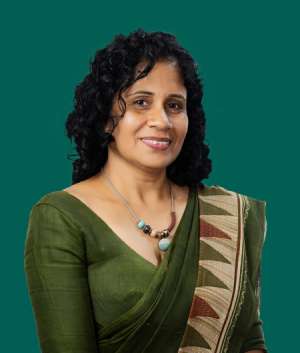
Nadeera Ramanayake
As Assistant Director of Planning at the Industrial Development Board of Ceylon, Nadeera Ramanayake creates and implements strategies to grow the country’s industries, and to support their recovery from the energy crisis. Climate change is a cross-cutting issue that concerns her deeply both at work and in her private life.
Nadeera believes that small changes in our daily lives can also have an immense impact. She refers to women as being “truly aware of the exact consumption of energy for everyday activities” and, she says, “their input [in climate action] would show what we should most focus on.”
To accelerate progress, a priority in her view is to groom and train many more Sri Lankan women to take on leadership roles in their community and at work. Studies show that women in leadership roles are more likely to invest in renewable energy and, according to UNIDO, women excel at managing energy in households, communities and businesses.
Reflecting on UNIDO’s energy management training and campaign, Nadeera says: “The more energy savers there are, the more the country will benefit.”