

Sri Lanka's
First Movers
First Movers: Leadership in action
Mr. Husni Salieh
CEO, Noyon Lanka (Pvt) Ltd
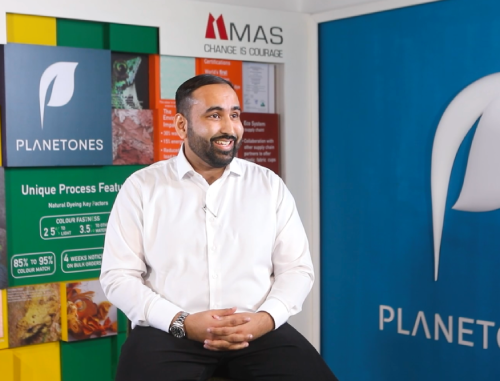
Watch the interview with Husni Salieh
A greener thread: how leaders in Sri Lankan apparel are driving change
The apparel industry stands out as potentially the second-worst global polluter after oil and gas. Energy use, carbon emissions, water utilization, and chemical discharge are all areas of significant environmental impact. Particularly concerning is the industry’s energy footprint. Complex global supply chains contribute to energy-intensive manufacturing processes, generating an estimated 1.2 billion tonnes of CO2 annually – a staggering 10 per cent of global greenhouse gas emissions. If left unchecked, this figure is projected to rise to 25 per cent by 2050.
Tackling climate change is urgent, and a clean energy transition in industry is no longer a choice but an imperative. This demands visionary leadership, unwavering determination, and innovative solutions. Sri Lanka’s “First Movers” embody these qualities. They aren’t just talking about sustainability – they’re driving it with every decision they make.
To support the nation’s climate agenda, the United Nations Industrial Development Organization’s (UNIDO) “Accelerating Industries Climate Response in Sri Lanka” project sat with Husni Salieh, the CEO of Noyon Lanka, to learn what drives his energy agenda. By amplifying voices like Husni’s, we hope to ignite a global movement of greener practices across all industries.
Q: Tell us about Noyon Lanka?
A: Noyon was born in Calais, over a hundred years ago. Twenty years ago, Noyon joined forces with MAS to bring cutting edge lace manufacturing to Sri Lanka. It was a perfect marriage of exquisite craftsmanship and modern manufacturing techniques.
Today, our vision extends beyond being a leading lace manufacturer. We’re also pushing through those traditional boundaries and diversifying into innovative and sustainable platforms.
Q: Was there an ‘Aha!’ moment or event that triggered your interest in using clean energy?
A: There isn’t a single defining moment, but there’s a quote that constantly resonates with me: “The greatest threat to our planet is the belief that someone else is going to save it.” It’s a wake-up call – there’s no one else coming, it’s up to us to act!
Q: How concerned are you about the impact that the climate crisis is having on Sri Lanka?
A: As a country, we should be very concerned. The impacts of climate change extend far beyond rising sea levels and changing weather patterns; the loss of biodiversity is another significant threat to Sri Lanka.
A common misconception is that being an island, we have an abundance of water. In reality, we are experiencing water stress levels, exceeding 90 per cent.
Heat stress is another growing concern. I mean, all of us feel it today, right? Temperatures in Sri Lanka are soaring!
Q: How is it affecting your own business now and in the future?
A: Climate change affects our business in so many direct and indirect ways. Disruptions to power supply due to extreme weather, increased energy costs due to limited availability or lack of alternatives, and potential future regulations on water extraction for our processes.
On a broader scale, global manufacturing supply chains can be disrupted by extreme weather events.
Q: What role do you think industries play in helping Sri Lanka (and the world!) tackle pollution and greenhouse gas emissions?
A: The role industries play is absolutely critical.
The key lies in embedding sustainability within existing business models. I think a lot of good work to this effect has been done and is being done, but to truly move the needle, we need to find a way for short-term business objectives to be intrinsically linked to the sustainability agenda. It has to be the way we do business, not a parallel work stream through which we push some sustainability initiatives.
Q: Which sustainability initiatives are you most proud of, and how have they reduced the environmental footprint of the business?
A: Signing up for science-based targets is one of the big steps that we’re very proud of, and this reflects a pivotal change for our organization in how we demonstrate our strong commitment to sustainability.
In 2023, roughly 70 per cent of our revenue came from sustainable products. We also achieved a 35 per cent reduction in carbon footprint compared to our 2019 baseline. We even created a platform called Planetones. This platform, which we are very excited about, helped us reduce 52 per cent of our water usage, 61 per cent of our energy usage and 63 per cent of our carbon dioxide footprint. It is a platform called Planetones, which we’re very excited about.
We have dedicated teams that look at problem solving and achievement of targets, but it goes beyond that. At Board level, we’re putting a sustainability lens on all the investments we make and taking into account our impact on the environment.
We’ve also installed a one-megawatt roof-mounted solar panel, introduced sustainable biomass boilers and retrofitted VFT technology and are utilizing real-time online energy monitoring systems. All these initiatives are helping us chip away at the bigger environmental challenge.
Q: What’s next in your journey to transform your company?
A: On the chemicals front, we’ve signed up with the Zero Discharge of Hazardous Chemicals Initiative, to eliminate 10 of the 14 hazardous chemicals that are found in processing.
Q: What do you think is the next step for us as a country?
A: The next step is truly to inculcate sustainability into our culture. As individuals and as a collective, we need to make it a part of our behaviour. The day it starts influencing not just our business decisions but also our personal decisions, I think we will see a seismic shift in our impact.
Mr. Pubudu De Silva
CEO, Teejay Lanka
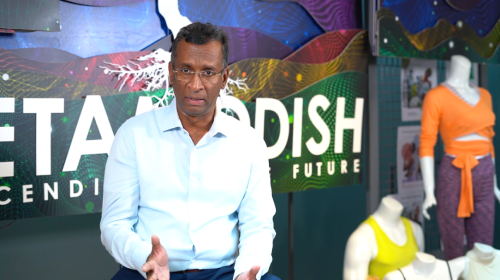
Watch the interview with Pubudu De Silva
Teejay Lanka is weaving a sustainable future for fashion
The world’s love affair with fashion comes at a cost. The textile industry, a giant behind the scenes, leaves a significant environmental footprint. From excessive water usage and energy consumption to chemical pollution and greenhouse gas emissions, the industry’s impact is undeniable.
But there’s a growing movement for change, and Teejay Lanka is at the forefront. As one of Sri Lanka’s leading apparel manufacturers, they aren’t just producing fabric for what we wear, they’re weaving a more sustainable future for fashion.
Sri Lanka’s industrial sector is a key player in the country’s climate agenda. The United Nations Industrial Development Organization’s (UNIDO) “Accelerating Industries Climate Response in Sri Lanka” project is collaborating with industry leaders like CEO of Teejay Lanka Pubudu De Silva to highlight, that with innovative solutions and a steadfast commitment to minimizing environmental impact, style can go hand-in-hand with sustainability.
This interview has been edited for clarity and brevity.
Q: What’s Teejay Lanka’s core business?
A: We produce fabric, specializing in weft knit fabric manufacture. Our journey began in 2001 as a joint venture between Textured Jersey UK and two local partners. In 2011, we took a significant step by becoming a publicly traded company.
Today, production capacity has reached 100 tons of fabric per day, translating to roughly 120 million meters annually. The Earth’s circumference is about 40 million meters, which would allow us to wrap the Earth with our fabric three times over!
Q: What triggered your determination to prioritize saving energy and using clean energy?
A: Sustainability has always been in the DNA of our company.
However, the 2022 energy crisis and subsequent economic downturn were major wake-up calls. Our electricity costs tripled, and furnace oil prices doubled, significantly impacting our business as fabric manufacturing relies heavily on both. These challenges highlighted the critical importance of sustainable energy sources.
We embarked on a comprehensive reevaluation of our processes to improve energy efficiency and performance, while simultaneously reducing greenhouse gas emissions. Prior to the crisis, energy costs accounted for seven to eight per cent of our overall expenses. However, the surge in energy prices caused this percentage to jump to 11 per cent, becoming an unsustainable cost burden.
Q: How concerned are you about the climate crisis and what’s your response?
A: I’m very concerned. The global textile industry is a major polluter, ranking second only to oil and gas. This is why cleaner production and environmental sustainability are top priorities within our sector. As responsible corporate citizens, we must take our environmental impact seriously.
In response, we’ve adopted a systematic and scientific approach to combat it. This is reflected by our participation in the Science Based Targets Initiative (SBTI), a well-respected initiative we have signed on to and had validated.
We have a comprehensive plan guided by a solid ESG (Environmental, Social, and Governance) framework. This roadmap includes established goals and measurable milestones that guide our efforts in tackling pollution and greenhouse gas emissions. The Teejay Group has achieved 100 per cent compliance with Zero Hazardous Chemicals (ZHC) standards, ensuring no harmful chemicals are released into the environment. Our commitment to responsible waste management translates to 100 per cent zero landfill compliance. We have always been ahead of the curve, when it comes to sustainability.
We have also introduced renewable energy sources and implemented energy management systems to improve our energy efficiency.
We recognize that sustainability requires investment and have evaluated our capital expenditure (CAPEX) needs to ensure we have the resources to implement and sustain crucial sustainability projects.
Q: How is the climate crisis impacting your business?
A: Climate change poses a significant threat to our entire industry. The textile industry is heavily reliant on a stable climate for both production and raw materials. Water, a precious natural resource, plays a critical role in our operations. Teejay Lanka and Teejay India collectively utilize approximately eight to nine million liters of water daily. This is a significant volume. We source our water from the Kelani River in Sri Lanka and the Godavari River in India.
The Seethawaka region, where Teejay Lanka is located, is particularly vulnerable to climate change, experiencing fluctuating water levels and droughts. Recognizing this challenge, we have taken significant steps to reduce our water footprint: including initiatives to use less water in production and exploring sustainable raw materials, unlike cotton, that require less water for cultivation.
Q: What role does the sector more generally play in helping to tackle industrial GHG emissions pollution?
A: Sri Lanka’s textile sector is actively taking steps to control and reduce pollution. Manufacturers recognize their environmental footprint and the importance of responsible practices. However, a key focus is ensuring these efforts are genuine and translate beyond mere “greenwashing.” For true progress, sustainability needs to be embedded within the DNA and culture of manufacturing organizations. It needs to be done with purpose.
Government regulations play a crucial role. Environmental Protection Licenses (EPL) and Dual Waste Licenses are just two that ensure companies comply with environmental sustainability standards.
Consumers are also increasingly prioritizing sustainability and putting pressure on companies to do the same. This has become a competitive advantage, with companies leveraging their sustainability credentials and certifications to market themselves.
Sri Lankan industries recognized the importance, long before it became fashionable to be sustainable; which is why we have Asia’s first green platinum-certified factories. It showcases our progressive approach towards circularity and zero landfill practices.
Q: What energy saving changes are you most proud of?
A: It makes me proud that Teejay has one of the largest Internet of Things (IoT) platforms on the island, specifically designed for real-time utility monitoring. It tracks energy, water, and machine utilization, providing valuable insights that enable us to streamline production processes and become more energy-conservative. The biggest benefit is the real-time data, which allows us to improve efficiency, efficacy and optimize production scheduling. Additionally, we are able to maximize machine utilization.
This became clear when energy costs at Teejay Lanka dropped from 11 per cent to 8 per cent within just one quarter, a significant 3 per cent reduction.
I’m also happy that two members of our management team are certified Energy Management System (EnMS) Experts through the United Nations Industrial Development Organization (UNIDO). Their expertise allows them to train and develop other executives and management staff. This investment will directly benefit both our bottom line and the environment.
Additionally, we have signed on for a solar power project that will commence soon. We also have a phase-out process for heavy fuel and gas, which is ongoing.
Q: What’s next in your journey to transform your company?
A: On the chemicals front, we’ve signed up with the Zero Discharge of Hazardous Chemicals Initiative, to eliminate 10 of the 14 hazardous chemicals that are found in processing.
Q: What do you think stands in the way of other industries achieving what you have done thus far?
A: It all starts with mindset and how passionate you are about the initiative. A committed team is also essential to driving sustainability. While sustainability initiatives and efforts can involve significant financial investments at the start, it can translate to financial gains in the long-term.
We have also identified a knowledge gap within the industry. We see it as our responsibility to bridge this gap by educating and empowering people.
Mr. Tyronne Weckasinghe
Managing Director, Flintec Transducers
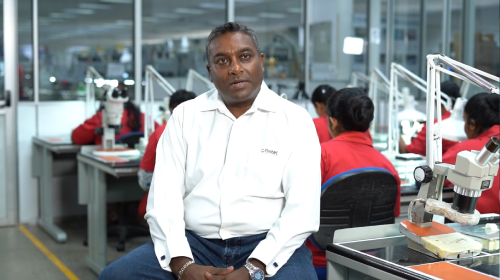
Watch the interview with Tyronne Weckasinghe
Electronic component manufacturing leaders champion a lifecycle approach to sustainability and climate action
In a world increasingly focused on environmental responsibility and climate action, manufacturers are facing a critical challenge: How to deliver high-quality products while minimizing their impact on the planet?
The answer lies in embracing a holistic approach to sustainability, one that considers a product’s entire life cycle – starting with the sustainable sourcing of raw materials to minimizing the environmental impact during production, and ending with the possibility for the product’s components being recycled or utilized in other contexts. With this perspective, manufacturers stand to maximize their products’ advantages, while simultaneously reducing their carbon footprint.
In alignment with Sri Lanka’s climate agenda, the United Nations Industrial Development Organization (UNIDO) collaborated with Tyronne Weckasinghe, Managing Director of Flintec Transducers Pvt Limited, for the “Accelerating Industries Climate Response” Project. By empowering forward-thinking leaders such as Tyronne, who are revolutionizing component manufacturing across its entire life cycle, we aim to advance further towards a sustainable future.
This interview has been edited for clarity and brevity.
Q: What is Flintec’s core business?
A: Flintec has built a reputation as a world leader in manufacturing force measuring devices. We handle everything in-house, from the initial design to final production. This commitment to vertical integration ensures the highest quality and control throughout the process.
Our story began in the late 1960s with a vision – a vision shared by three pioneers: Harry Lockery, Kjell Nordstrom, and Rune Flinth. Rune is still active at the age of 89.
Flintec was originally established in the USA and slowly expanded its global presence. While expanding our sales wings to countries like Germany, UK, Sweden, Italy, France, Brazil, Singapore, India, Korea and China, in the early 1990s, we opened a manufacturing plant in Sri Lanka, which has since become our only production facility.
Q: Was there an “aha” moment that made you prioritize energy saving and using clean energy?
A: While cost saving was always a priority, Flintec hadn’t actively focused on energy efficiency. However, signing the UN Global Compact Sustainability Agreement in 2020 opened our eyes to the potential for improvement as Flintec was highlighted as the highest CO2 emitting company within the Indutrade Group of Companies. This sparked an “aha” moment. It prompted us to explore energy-saving initiatives.
Asanka Manoj, our Assistant General Manager of Production and Facility Maintenance, took the lead in our energy management journey. In May 2022, he discovered the UNIDO Energy Management Systems (EnMS) training programme and took advantage of this valuable opportunity.
Q: How concerned are you about the impact that climate change is having in Sri Lanka and how it impacts your business?
A: Sustainability is a core value at Flintec, and we’re deeply concerned about the impact of climate change. Sri Lanka has faced extreme weather events recently. As an organization that utilizes a significant amount of water in production, this directly affects our business operations as well.
Both on an individual level and company-wide, we are actively implementing measures to reduce our overall environmental footprint. We’re working towards a sustainable future for the next generation and beyond.
Also, industries have a responsibility to implement proper waste handling practices. As part of our commitment to sustainability, Flintec ensures our waste is channeled through authorized and certified waste management providers. We also require the same standards from our third-party partners.
Q: What are the key changes you’ve made to save energy and utilize clean sources of energy?
A: The Flintec Group identified its Sri Lankan operations as the biggest source of CO2 emissions. To address this, we began with a focus on energy consumption, an area we hadn’t previously considered.
Our fully air-conditioned facility was the biggest source of energy use. The EnMS training taught us how to improve efficiency in this area, which led to significant energy savings.
Much of our machinery relies on compressed air and we didn’t realize the cost of air leakage. Previously, we relied on annual maintenance and follow-ups. However, the training emphasized the need for regular inspections of all our air lines. This simple change has also resulted in saving massive amounts of energy.
We also invested approximately USD 1.4 million to install a 2-megawatt solar panel system on the facility’s roof. This has helped us reduce 45 to 50 per cent of our CO2 emissions, marking a significant first step in our sustainability journey.
Q: What’s next in Flintec’s sustainability journey?
A: Our goal is to achieve net-zero CO2 emissions by 2030 – this is the commitment we made in 2020.
Apart from solar, in the last 14 months, with the help of the UNIDO EnMS training programme, we have been able to save approximately 300,000 kilowatt-hours of energy and reduce about 200 tonnes of CO2 emissions.
Now we are exploring next steps: the first is a reforestation initiative, which is already underway. Sri Lanka’s natural beauty is disappearing due to deforestation. This effort aims to restore forested land that has been depleted over the years. Then, we’re actively evaluating the options of either wind or solar farming, to determine the most effective path forward.
Q: What would you tell other industry leaders who may be thinking about sustainability?
A: It’s all about the enthusiasm – and then start with the low hanging fruit. You have to start small but with focused action.
Ghaffar Ghouse
CEO of E.B. Creasy's Personal Care Division
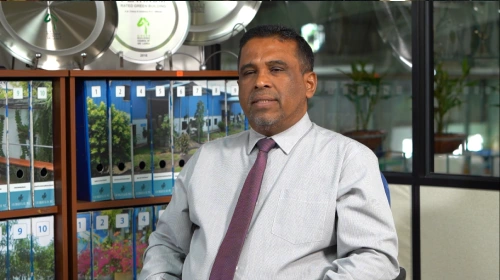
Watch the interview with Ghaffar Ghouse
E.B. Creasy's: An industrial giant and a force for climate action
The clock is ticking for Sri Lankan industry to cut greenhouse gas emissions by 7 per cent by 2030. And it is the First Movers, a group of companies committed to finding sustainable, cost-effective and environmentally-sound ways to operate and to grow, that are showing other companies what is possible.
As one of Sri Lanka’s oldest conglomerates, operating across nine sectors and over 30 brands, E.B. Creasy & Company is one such major player that is leading by example. This industrial giant has adopted an innovative, holistic approach that focuses on energy efficiency, renewable energy, responsible water management and waste reduction, and hopes it can use its influence to inspire wider industry action.
The United Nations Industrial Development Organization’s (UNIDO) Accelerating Industries Climate Response in Sri Lanka project interviewed Ghaffar Ghouse, CEO of E.B. Creasy’s Personal Care Division, to hear about the significant strides the company is taking to further climate action.
This interview has been edited for clarity and brevity.
Q: Can you give us some background on your company?
A: E.B. Creasy has a rich 146-year history. Here, at the Personal Care Manufacturing Arm, we specialize in two leading products: BiC razors and DENTA toothbrushes. Both brands are leaders in their respective markets.
Q: Was there a turning point in your journey towards clean energy?
A: We’d been moving towards sustainability for some time, but calculating our carbon footprint for a carbon neutral factory was a game-changer. When we saw that nearly 95 per cent of our emissions came from grid electricity, it was a shock. That realization triggered our determination to prioritize energy conservation and clean energy sources.
Q: To what extent do you believe Sri Lanka is experiencing the effects of the climate crisis?
A: Sri Lanka is a small island in the Indian Ocean. Our unique geographical location, coupled with the economy’s dependence on climate-sensitive industries like agriculture and tourism, makes us exceptionally vulnerable to the escalating impacts of climate change. The densely populated coastal regions further exacerbate the situation. At E. B. Creasy, we fully grasp the severity of this crisis and its far-reaching consequences for our nation, and we’re deeply committed to playing our part in mitigating climate change and promoting a sustainable future for Sri Lanka.
Q: What are the implications for your business, now and in the long-term?
A: Managing water scarcity and ensuring a stable energy supply are becoming increasingly challenging in this period of climate stress. By investing in resilience measures now, we are laying a solid foundation for the future. [Using] renewable energy plus water conservation and disaster preparedness helps us deal with operational disruptions and regulatory risks. Embracing sustainable technologies and practices also better aligns our business with the global market.
Consumer expectations are also evolving; they are becoming more environmentally conscious and expect businesses to place a heightened emphasis on sustainability. Another aspect …is being mindful of our impact on local communities, and the importance of addressing the social challenges of climate change which affect the lives and livelihoods of our employees and stakeholders.
Q: What role do you think industries play in addressing environmental challenges?
A: Industries, in Sri Lanka and worldwide, play a pivotal role in reducing greenhouse gas emissions. Locally, industries are making changes by adopting cleaner production methods, optimizing energy efficiency and harnessing renewable energy sources.
Global corporations are setting benchmarks for sustainable practices through innovation, which then inspires adoption in other regions and accelerates the overall transition to a low-carbon economy. By collaborating with governments, NGOs and communities, industries are shaping a future where economic growth and environmental stewardship coexist.
Q: What are your most significant achievements in improving energy efficiency and increasing clean energy sources?
A: We’re particularly proud of our ISO 50001:2018 Energy Management System certification, which recognizes our rigorous energy management practices and continuous efforts to improve energy efficiency.
We’ve made substantial investments in solar and wind power, which have significantly reduced our reliance on traditional energy sources. Our solar power net metering system records a robust 20,000 kWh per month. And our wind turbines, harnessing energy from the factory’s ventilation system exhaust, powers security lighting for the garden. Additionally, upgrading to energy-efficient machinery and implementing a real-time energy monitoring system… enables us to apply any necessary energy saving measures.
Q: What does the journey of transformation look like for your company?
A: Our sustainability journey is guided by a three-fold approach: furthering renewable energy integration, continuous monitoring and optimization of energy consumption, and fostering community engagement and education.
We’re moving from a grid-connected solar system towards a hybrid model, where the solar energy we generate is channelled for our own use. This shift offers a stable and predictable power source, which boosts operational efficiency.
We are also running an ambitious campaign to educate the next generation about energy conservation and sustainable living through outreach programmes in schools and universities. … we aim to create a lasting impact that extends beyond our organization and into the wider community.
Q: What are some obstacles preventing other businesses from achieving similar progress on sustainability?
A: Often, it’s not a lack of resources but mindset that limits progress. Embracing change, driving innovation and truly committing to sustainability can unlock doors that others leave closed. It’s not only about doing things differently; it’s about thinking differently. A corporate culture that undervalues sustainability, or lacks employee engagement, may find it challenging to introduce and sustain green practices.
Many industries may not fully understand the benefits of sustainable practices or the potential long-term cost savings of energy optimization. This lack of knowledge can lead to inertia in adopting a greener approach.
Q: How would you convince your peers who may be lagging behind in their sustainability efforts?
A: Very simply, responsible business practices are good for your business image and also reduce legal risks. Compliance with standards like ISO can open doors to new markets and business opportunities. But it isn’t just about compliance; it’s about future-proofing your business. You’re building operational resilience against fluctuating energy costs and regulatory changes. Sustainability initiatives also boost employee morale and engagement. Employees are increasingly drawn to companies that align with their values.
Jeevith Senaratne
Director Operations of Star Garments
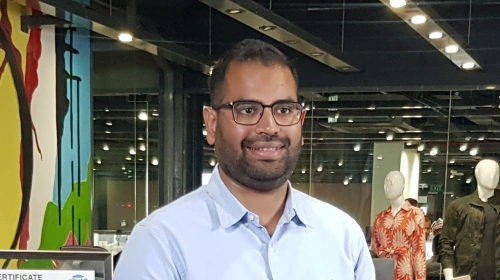
Watch the interview with Jeevith Senaratne
Reimagining fashion: Leading the sustainable revolution
As consumers and regulators alike demand higher sustainability standards and greater transparency, the fashion industry faces a critical challenge: innovate and adapt, or risk causing irreversible harm to the planet.
Star Garments Group is stepping up to meet this challenge. Founded in Sri Lanka in 1978, the company has grown from a single factory with 300 employees into a global powerhouse in apparel sourcing, design, and manufacturing, now employing over 10,000 people. Beyond serving some of the world’s biggest brands, Star Garments is deeply committed to sustainability.
Jeevith Senaratne, Director of Operations at Star Garments, recognizes the profound threat climate change poses, particularly for a small island nation like Sri Lanka. In support of the country’s climate agenda, the United Nations Industrial Development Organization’s (UNIDO) “Accelerating Industries Climate Response in Sri Lanka” project spoke with Senaratne to explore how he integrates sustainability into daily operations and encourages others to follow suit.
This interview has been edited for clarity and brevity.
Q: Can you give us some background on your company?
A: We’re more than just a manufacturer, Star Garments is an end-to-end apparel solutions provider. We are equipped to handle a brand’s needs from concept to completion: from design and sourcing to manufacturing and delivery. This is what sets us apart from traditional apparel manufacturers.
Q: Was there an “aha” moment that led you to prioritize energy efficiency?
A: Prior to Komar’s acquisition of Star Garments, we saw sustainability purely as a CSR arm that carried out a few initiatives on the side. Then, in 2017, we began work on our innovation center. This building, where we are currently located, was our “aha” moment, the turning point that led us to invest significantly in sustainability. It was Sri Lanka’s first Passive House, meaning it operates at 30 per cent of the energy cost of a building of similar size. Additionally, it was the first building in Sri Lanka to be certified as LEED Platinum under Version 4.
Q: How concerned are you about the impact that climate change is having on Sri Lanka?
A: We Sri Lankans have witnessed firsthand, the impacts of the climate crisis, in recent years. Rising sea levels, increased flooding and a spike in heat waves across the country. It has shown us there is an urgent need for action or we face suffering the consequences in the coming years.
Q: What are the implications for your business, now and in the long-term?
A: From a business standpoint, the global perspective on climate change greatly affects us. We’ve seen the EU pass legislation that will take effect in the next few years, with the U.S. not far behind. As manufacturers, we need to anticipate future legislative changes and work towards being ready when they come into effect, or we risk falling behind our competitors.
Q: What role do you think industries play in addressing environmental challenges?
A: I believe the apparel industry is in dire need of a reality check. As the second largest global industry in terms of pollution, we are responsible for approximately 10 per cent of the planet’s carbon emissions. If we fail to address this issue, it will be futile to complain about it later. It is our responsibility to examine our carbon footprint, the waste we generate, and explore ways to improve our practices moving forward.
Q: What are your most significant achievements in improving energy efficiency and increasing clean energy sources?
A: What we’re most proud of is going beyond being an organization focused on checkboxes and certifications to concentrating on projects that create long-term impact. Starting with the Passive House, which I mentioned earlier, we have set ourselves clear targets to achieve by 2030.
We’ve set ourselves targets for energy, water and biodiversity restoration. In this space, we’ve invested in approximately 4.9 megawatts of solar rooftop energy. We currently recycle about 52 million liters of water annually and have also invested in a flagship project in Anavilundava. This carbon restoration project for Sri Lanka involves restoring a mangrove plantation located not far from our premises.
In addition, we’ve invested in processes using fewer synthetic options and more natural options. One such investment is our partnership with SLINTEC, which was recently completed with the creation of a natural dye made from palm oil waste. This natural dye can be used in apparel manufacturing.
Q: What does the journey of transformation look like for your company?
A: Our next major goal is to offset our Scope 1 and 2 emissions, which we aim to achieve by 2030. In addition, we are working to increase transparency across our supply chain. Our project in West Africa, Togo, is an example of this. Here, we hope to implement a concept-to-completion process: from sourcing African cotton to creating the finished garment in Africa.
Q: What are some obstacles preventing other businesses from achieving similar progress on sustainability?
A: I believe the limited progress in this area is due to industries still viewing sustainability as a CSR initiative. I would say, it’s time to shift this narrative to considering sustainability an operational necessity rather than an external component that is unrelated to operations.
Q: How would you convince your peers who may be lagging behind in their sustainability efforts?
A: President Barack Obama aptly stated “We are the first generation to feel the impact of climate change and the last generation that can do something about it.” Therefore, it is our responsibility to weave sustainability into everything we do each day; it is our only hope to address the colossal challenge we face.
Dr. Roshan Rajadurai
Managing Director of Talawakelle Tea Estates PLC
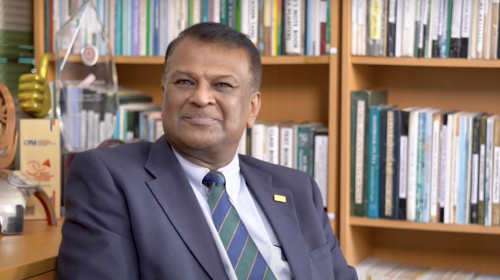
Watch the interview with Dr. Roshan Rajadurai
Protecting our planet, one cup at a time
Every day, the world drinks about five billion cups of tea, making it the second most consumed beverage after water. With tea grown in over 60 countries, the industry is a global powerhouse. In 2021, 6.5 million metric tons of tea were produced, according to the United Nations Food and Agriculture Organization (FAO). China is the largest producer, followed by India, Kenya, and Sri Lanka. The sector supports the livelihoods of 13 million people, including 9 million smallholder farmers who grow 60% of the world’s tea.
However, tea production leaves a significant environmental footprint. Deforestation, pollution, and the degradation of fragile ecosystems are common issues, especially in tropical areas. Climate change further threatens tea yields and the livelihoods of small farmers.
Experts are pushing for more sustainable solutions, like adopting a circular economy model, where waste is reused, and renewable energy powers production. Sri Lanka is making strides in this direction. Dr. Roshan Rajadurai, Managing Director of Talawakelle Tea Estates PLC, is a leader in this movement. His company is shifting towards clean energy and sustainable practices, setting an example for the rest of the tea industry.
As part of these efforts, two members of Talawakelle Tea Estates PLC have trained with the United Nations Industrial Development Organization (UNIDO) to enhance their energy management systems. The UN organization is supporting the country’s climate goals through its “Accelerating Industries Climate Response in Sri Lanka” project.
This interview has been edited for clarity and brevity.
Q: Can you give us some background on your company?
A: Our company provides livelihoods and opportunities for approximately 40,000 people by producing a world-class beverage: Ceylon Tea!
Q: Was there a turning point in your journey towards clean energy?
A: I can’t pinpoint a specific tipping point, it was more of a gradual transformation; becoming aware of the necessity to follow a sustainable path, mainly because it has a direct impact on our business operations.
Q: How concerned are you about the impact that the climate crisis is having on Sri Lanka?
A: The climate crisis poses a significant threat to Sri Lanka, and tea cultivation. It is a vital segment of our agriculture portfolio that is particularly vulnerable to climate change. The direct impact on our operations highlights the urgent need for sustainable practices to ensure the long-term viability of our industry.
Q: What role do you think industries play in addressing environmental challenges?
A: Industries play the most crucial role in addressing global pollution and greenhouse gas emissions.
I think awareness and knowledge of the adverse effects of greenhouse gases, in particular, are growing. From management level to individual employees, people are starting to talk about it and taking action to mitigate and prevent it. This collective action is essential for a sustainable future.
Q: What energy saving measures are you taking?
A: We employ an energy-saving strategy that combines both the traditional and the modern. For example, we’ve established scientifically managed sustainable fuelwood plantations to reduce our reliance on fossil fuels.
Additionally, we’ve embraced renewable energy sources like solar and hydropower. Solar power is taking off in a big way in Sri Lanka. Many of our factories and bungalows are now powered by rooftop solar panels.
Q: What are your most significant achievements in improving energy efficiency and increasing clean energy sources?
A: One of our most significant achievements has been the shift towards “Regenerative and Rejuvenative Agriculture”. This is the approach we take to support our sustainable fuelwood plantations.
In addition to converting to solar and hydropower, we’ve also taken steps to reduce our overall electricity consumption.
Q: What are the next steps in your journey to transform your company?
A: My intention is to go further and achieve higher momentum on this journey towards relying 100 per cent on our own generated energy.
We’re also dedicated to creating awareness right down to the worker level. We’re achieving this through education and by engaging our employees in discussions about sustainability. Through these efforts, people are becoming increasingly aware of the necessity of adopting sustainable practices at every stage of our operations.
Q: What are some obstacles preventing other businesses from achieving similar progress on sustainability?
A: I believe that traditional mindsets and economic constraints are significant barriers for other industries adopting sustainable practices. The initial stages of implementing sustainable initiatives require substantial investment in terms of financing, effort and management, and time. It takes a lot to start the process.
However, speaking on behalf of the plantation sector, there is a growing awareness of the importance and necessity of sustainability and it is driving a gradual shift in direction towards more environmentally conscious practices.
Q: How would you convince your peers who may be lagging behind in their sustainability efforts?
A: I urge them to recognize that sustainability is no longer a choice but a requisite. By embracing a sustainable mindset and attitude, and adopting sustainable practices, we can not only contribute to a healthier planet but also strengthen our industry’s reputation. When it comes to tea, Sri Lanka is already a global leader. My hope is that we can now strive to position Sri Lanka as the leading force for sustainability in the industry, setting the benchmark for others to follow.