
When sustainable energy is your cup of tea
A lot of energy goes into making tea leaves. After being plucked, the leaves are withered, rolled, oxygenated, dried and graded in the factory. At each step of this process, the managers at the Holyrood Tea Estate, in Sri Lanka’s hill country, have been working to save energy and where possible use renewable power sources. They are on a mission to produce tea in a sustainable way.
“As a nation, for the past few years, we were struggling with the energy crisis,” said Krishna Ranagala, Sustainability and Quality System Development Manager at Talawakelle Tea Estates PLC, of which Holyrood is one estate. “Because of that, the issue of energy is more important than ever,” he said.
Sujeve Kanna, Holyrood Estate Manager, agrees that it makes economic sense to switch from costly imported fossil fuels to self-generated renewables across the tea industry, but there is also an important climate aspect. “As an organization we are heavily reliant on the health of the natural environment,” he said.
A climate for change
The 465 hectare Holyrood Tea Estate produces around 357,558 kilos of tea annually. But, more erratic weather, driven by climate change, is impacting operations across this estate and the others in the Talawakelle portfolio. “Heavy downpours and droughts means the crop goes down,” said Mr. Kanna. This is an important factor in the decision to decarbonize its entire manufacturing process. Over the years, the company has invested in three mini-hydro plants and solar rooftop panels to produce clean and renewable energy.
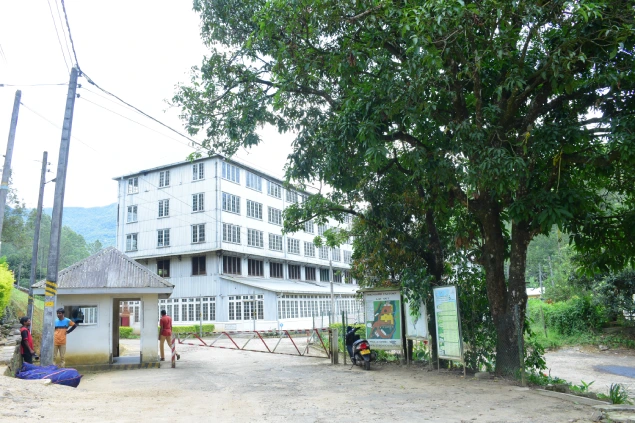
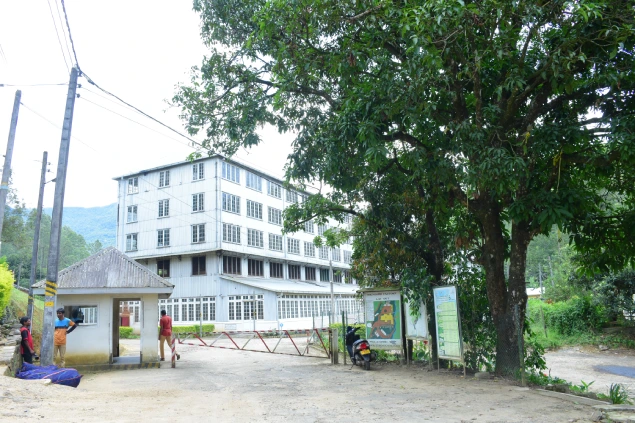
The Holyrood tea estate in Sri Lanka’s highlands produces 357,558 kilos of tea annually. Credit: Small World Stories/Macarena Aguilar.
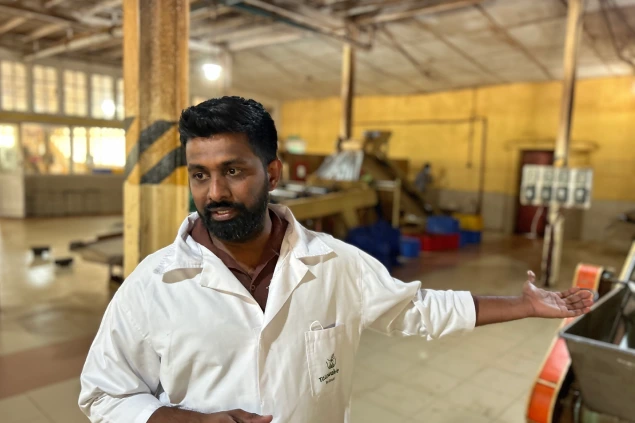
As part of the company’s decarbonization strategy, Mr. Ranagala is also interested in stopping energy waste throughout the production process. This led him to participate in the European Union funded Accelerating Industries’ Climate Response in Sri Lanka (AICR-SL) project’s internationally recognized Energy Management Systems (EnMS) training. The training is conducted by leading United Nations Industrial Development Organization (UNIDO) trainers. The one-year course introduced Mr. Ranagala to several no-cost and low-cost ways of cutting energy waste, saving the company money and reducing emissions.
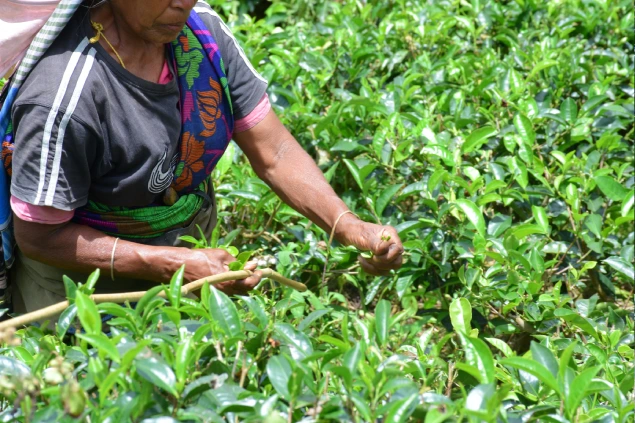
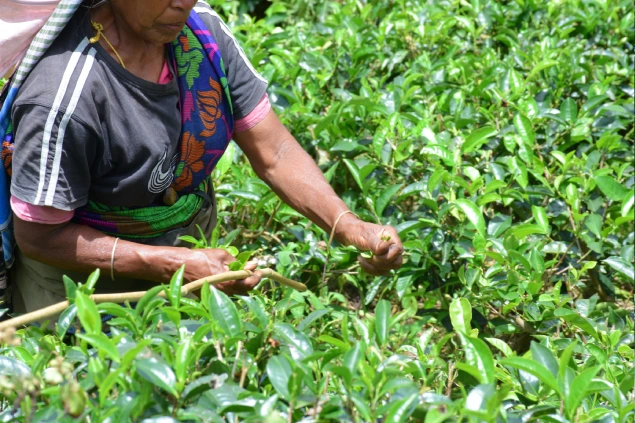
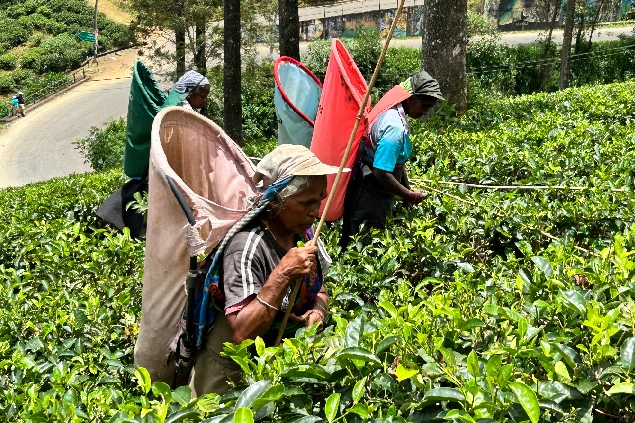
This industry is very sensitive to weather and climate change is having an impact on harvests. Credit: Small World Stories/Macarena Aguilar.
Off to a good start
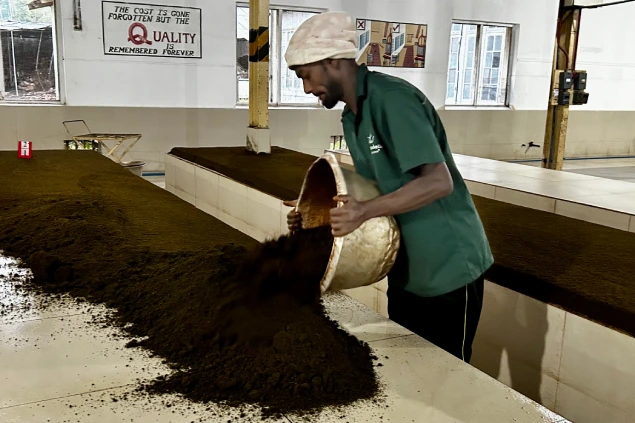
The most energy intensive part of tea leaf production occurs at the start, during the withering process, where the freshly plucked leaves are laid out to lose moisture, with fans circulating air around them. This process takes 12 to 14 hours. “If everything is done right here, then the whole process will go smoothly, but if it’s messed up, you lose the real taste and colour,” Mr. Kanna said.
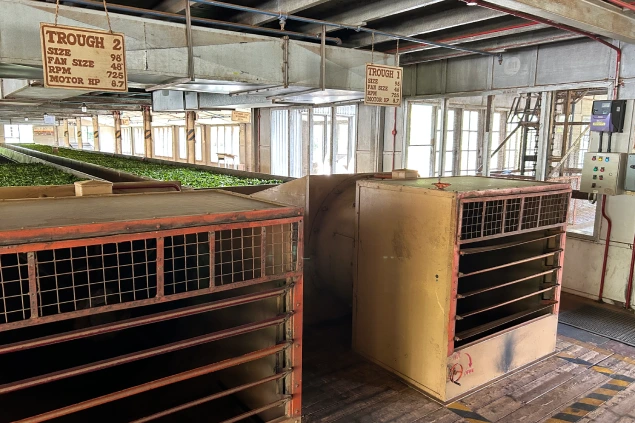
Energy savings at this first stage of tea processing is helping the company reduce costs and emissions. Credit: Small World Stories/Macarena Aguilar.
To save energy at this crucial stage, Mr. Ranagala and his team assessed the motors driving the fans and realised that they could use a less powerful machine, without losing the needed airflow. They also switched the airflow control system from being manually operated to automatically controlled. “We can now adjust the airflow automatically according to the wither level of the leaves, reducing energy consumption,” he said.
Releasing and locking in the flavour
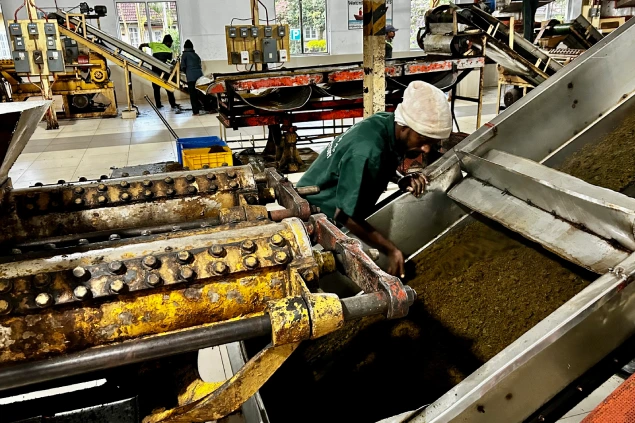
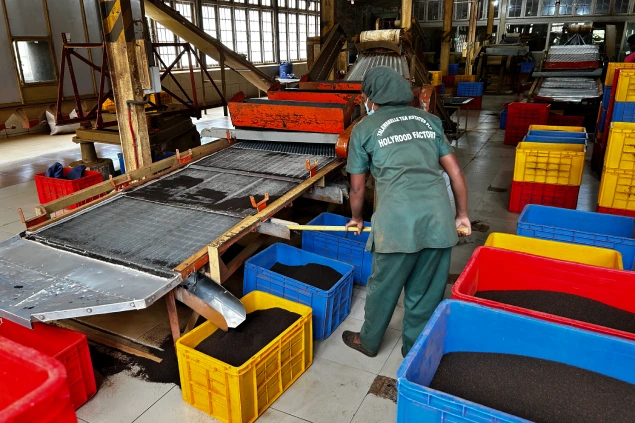
Once the leaves reach the right level of wither, it’s time for rolling and this is where the magic happens. The leaves are gently twisted or rolled to break down their cell walls, releasing enzymes and essential oils. This helps shape the leaves while initiating the oxidation process, which enhances the flavor and aroma of the tea.
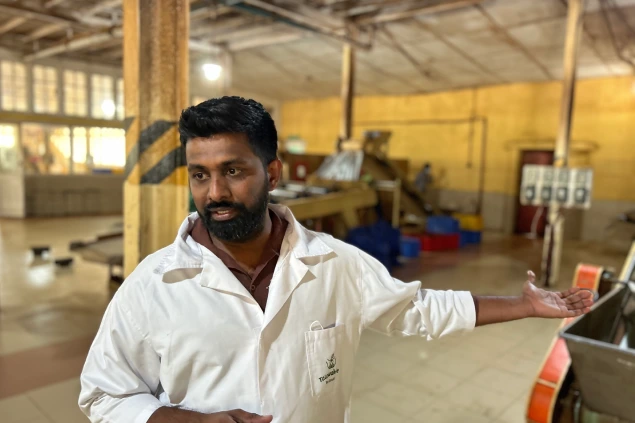
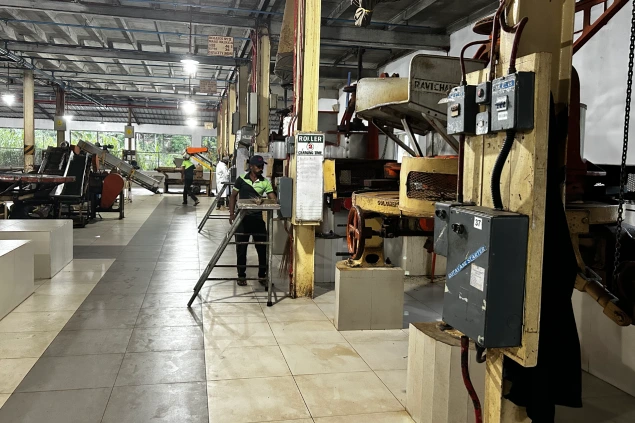
Motor maintenance is crucial for saving energy, says Mr. Ranagala. Credit: Small World Stories/Macarena Aguilar.
A number of machines are used as part of this process, Mr.Ranagala explains. “If any motors are operating inefficiently, it will negatively impact on the energy use at that stage, so machine maintenance is very important for us here,” he said.
After rolling and oxidation, the tea leaves are heated to lock in their flavor. This is typically done using hot air, steam, or a drying oven. The moisture content is eventually reduced to preserve the leaves and ensure they are crisp, ready for storage and packaging.
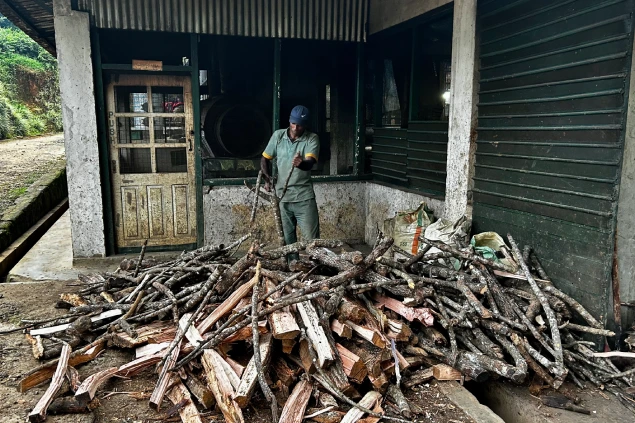
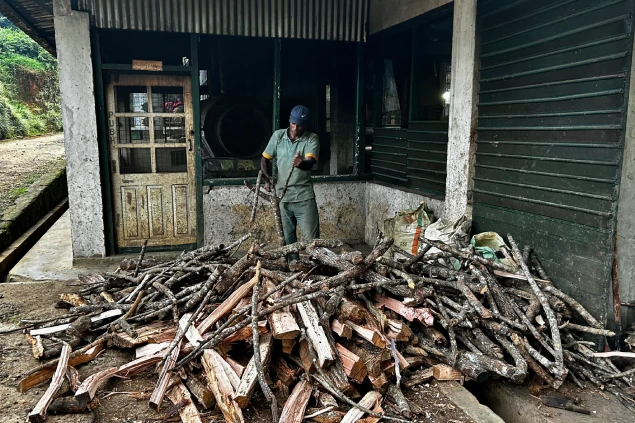
Holyrood uses biomass from their own plantations and furniture shop off cuts, rather than diesel to fuel their boiler. Credit: Small World Stories/Macarena Aguilar.
At this step of the process, the Holyrood team have switched their diesel powered drying system to biomass. “We use firewood from our own plantations as well as off cuts from local furniture shops,” Mr. Kanna said. But his vision is to ultimately move away from biomass entirely by exploring a way to electrify the withering and drying processes. “We have agreed to undertake a feasibility study on this,” said Chief Technical Specialist at the AICR-SL, Jagathdeva Vidanagama. “If successful, this could help the entire tea sector to eliminate the need for biomass, enhance process control and improve product quality,” he said.
An energy efficient cup of tea
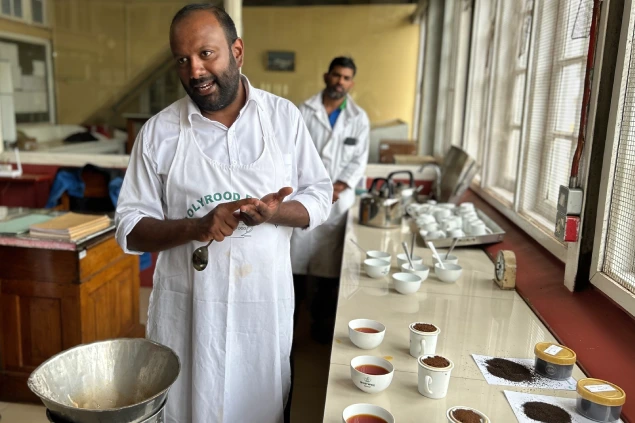
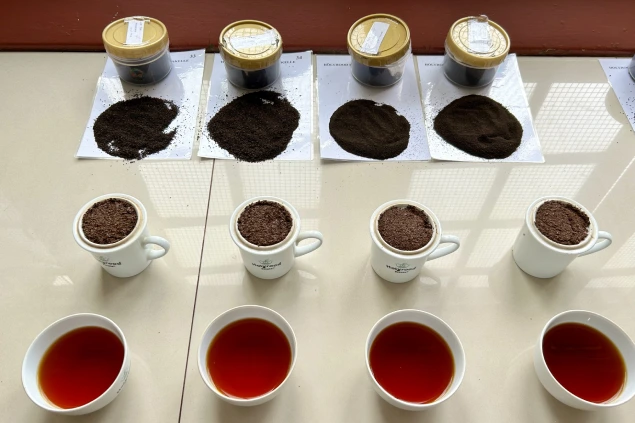
“Here in Sri Lanka, we make the best tea in the world,” Mr. Kanna said as the different teas produced at Holyrood are prepared in the tasting room. “For us, we consume tea first thing in the morning; when we are tired, we use it as a refreshing drink; when a visitor comes, we offer it as a welcome drink–everyone consumes it,” he said.
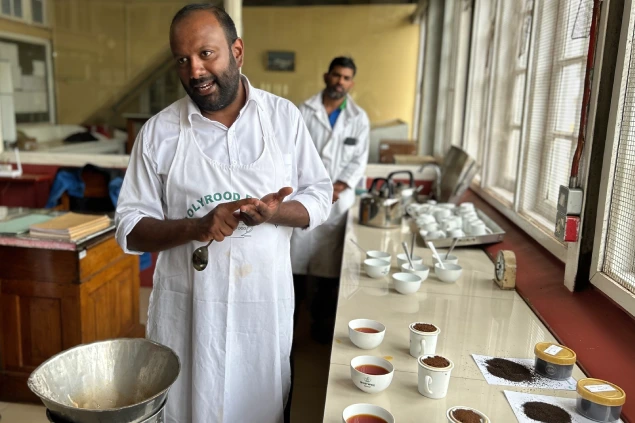
“Here in Sri Lanka we make the best tea,” says Mr. Kanna as he is about to taste the latest batch produced. Credit: Small World Stories/Macarena Aguilar.
Sri Lanka’s most popular drink is also becoming more energy efficient. Mr. Ranagala estimates that the changes he and his team have made as a result of the UNIDO EnMS training has already reduced energy consumption by 10 per cent. “We believe that we can achieve more,” he said. “There are many opportunities for saving energy and we will continue to work to find.