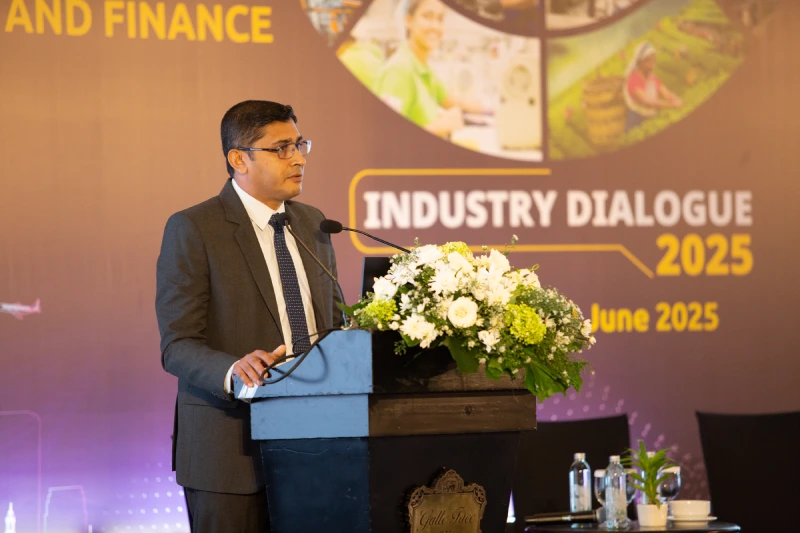
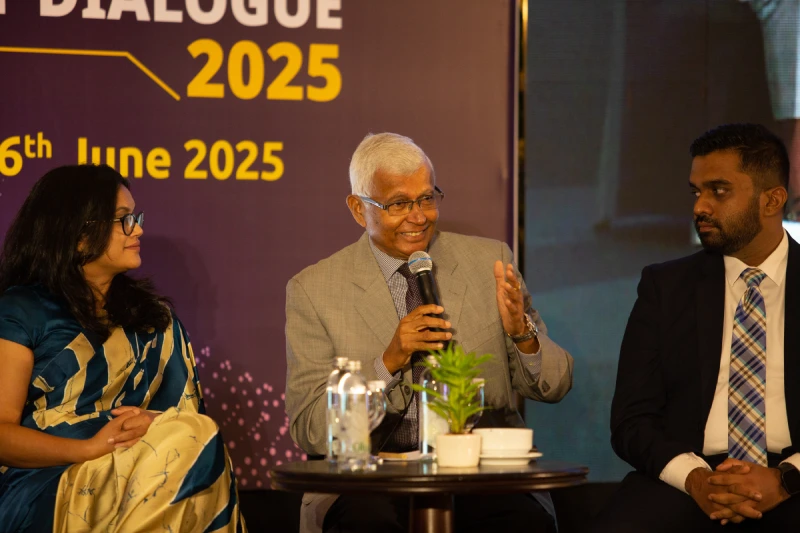
The 2025 Industry Dialogue saw more than 150 key players from across government, industry, civil society and the international community gather in Colombo to discuss the industrial sector’s growing role in meeting national climate response targets.
This year’s event was the third national Industry Dialogue organized by the European Union funded Accelerating Industries’ Climate Response in Sri Lanka project, which is led by the Government of Sri Lanka, and implemented by the United Nations Industrial Development Organization (UNIDO). It provided an important chance for key stakeholders to share their experiences and ideas for overcoming critical decarbonization challenges and opportunities.
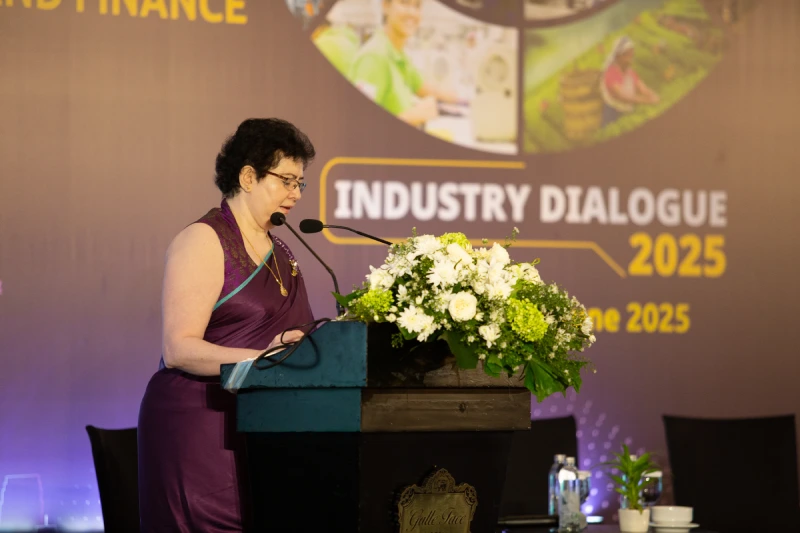
In her opening remarks Ms. Thilaka Jayasundara, the Secretary of the Ministry of Industries and Entrepreneurship Development, pointed to the urgent economic need for Sri Lanka’s industrial sector to make the leap to cleaner production. “To claim a significant share in the global market our industries have to beat the global competition through economic and sustainable transformation,” she said.
This year’s discussion centred on the industry’s role in meeting national climate commitments, the importance of data-driven decision-making, and the need for accessible finance to support industrial decarbonization efforts.
More ambitious reductions in industry emissions presented
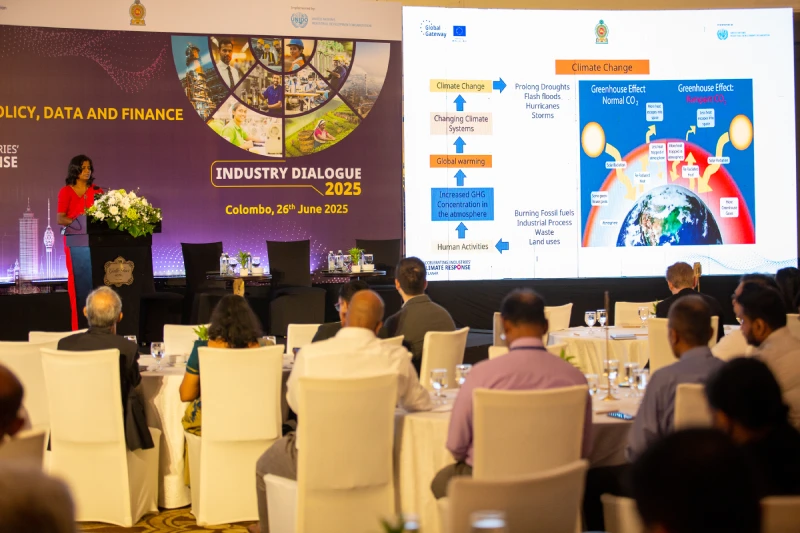
This year’s event took place as Sri Lanka prepares to submit its updated national 2035 climate targets and actions under the Paris agreement, known as the Nationally Determined Contributions (NDC) 3.0. Kicking off the first of three panel discussions, K.N Kumudini Vidyalankara, the Director of Environment Planning and Economics at the Ministry of Environment presented the process for developing the updated targets. She also revealed that under renewed commitments through NDC 3.0, the industry greenhouse gas (GHG) emissions reduction target would increase from 7 per cent to 13 per cent.
She said that achieving these goals will require important shifts in how key industrial sectors operate, but for those who embrace the change, there are potential benefits. These include: access to government incentives, cost savings through energy efficiency, risk mitigation, and greater competitiveness. A robust Q and A session followed the first panel discussion.
New sub-sector energy use and GHG emissions data revealed
Dr. Jagathdeva Vidanagama, Chief Technical Specialist at the United Nations Industrial Development Organization (UNIDO), started the second session by presenting new data on energy use and GHG emissions in industrial sub-sectors. These included cement, apparel, rubber, and tea. These findings highlighted the critical importance of Sri Lanka’s new Monitoring, Reporting and Verification (MRV) system, which is intended to support evidence-based decisions across government and industry for emissions reductions.
“Data driven decision making is one of the key success factors in achieving energy efficiency and emission reduction targets at the industry as well as national levels” he said. “With accurate, relevant and accessible information, all stakeholders can have meaningful insights and effectively implement effective mitigation strategies and actions,” he concluded.
During the Q and A session that followed, many participants expressed their deep interest in the newly available data, analytics and insights, and its potential use for informed decision-making.
Unlocking finance for cleaner industries
The final session examined some of the key bottlenecks to unlocking green finance for industrial transformation. Rashindu Mendis, an energy efficiency expert with UNIDO began the session with a presentation highlighting some of the ways that the project has been working to address these challenges. These included training for finance institutions to demystify decarbonization efforts so that these institutions can assess investment proposals with confidence.
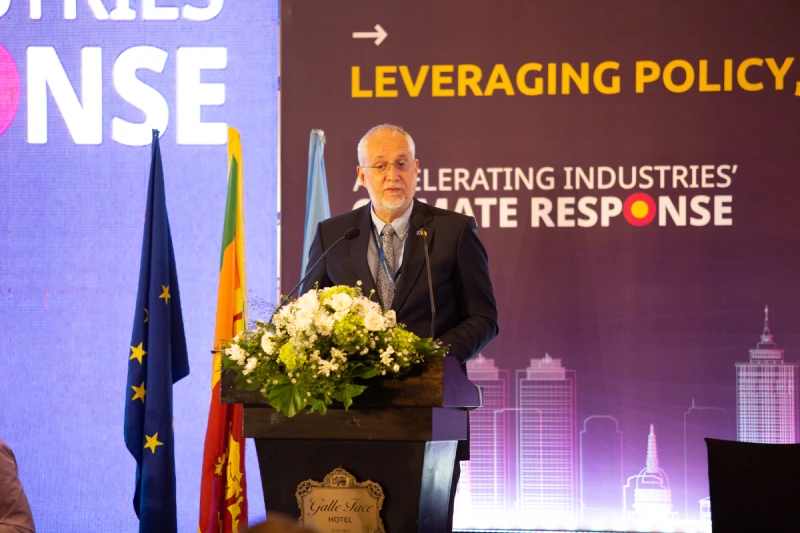
“Today’s event has shown Sri Lanka’s commitment to adopting greater energy efficiency in its industrial sector, which is very encouraging to see. This approach supports climate change and environmental goals and aligns with international commitments in particular regarding the required updates to the NDCs. The EU is happy to support these initiatives in line with our Global Gateway strategy”, said Dr. Johann Hesse the Head of Cooperation at the Delegation of the European Union to Sri Lanka and the Maldives.
On the sidelines of the event, sought-after decarbonization resources, reference materials and training opportunities were made available for download using QR codes.